
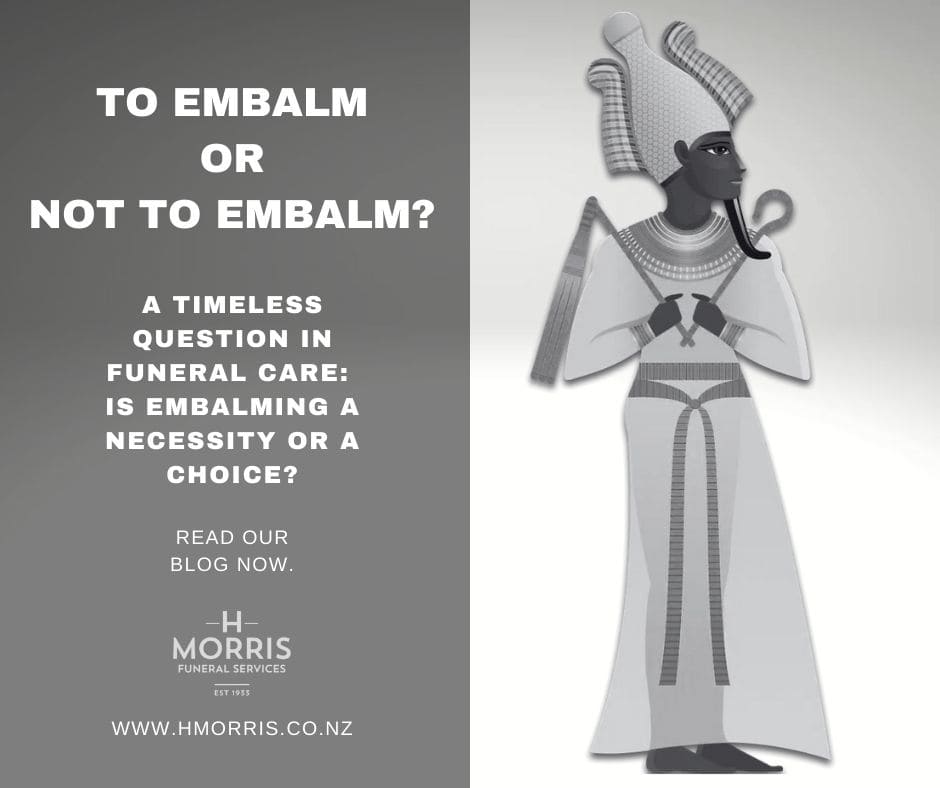
When someone dies, movies often paint a serene picture, soft lighting, peaceful expression, maybe even a gentle smile. Reality? It’s not quite like that. In real life, death can look very different. Tubes and hospital equipment might still be attached, muscles stiffen, and features don’t always fall into a calm pose. Sometimes there’s an odour, and if someone wasn’t found straight away, things can be even harder to face.
That’s why “body care” exists. It’s about dignity and making sure your loved one is clean, clothed, and looks peaceful for their final farewell. And one of the choices you’ll be asked about is embalming. So, what is it and do you really need it?
What Embalming Actually Is
In simple terms, embalming is a process that preserves and sanitises the body after death. It slows down natural changes and helps restore a more restful appearance. It’s not mandatory (unless someone is being sent overseas), and it depends on what feels right for you.
Think of embalming as three things rolled into one:
- Sanitisation: Removes bacteria and pathogens so the body is safe to handle.
- Preservation: Delays natural changes, giving families more time.
- Presentation: Helps create a calm, natural look for viewing.
Why Do People Choose Embalming?
There’s no one-size-fits-all answer, but here are the most common reasons:
- Time to Say Goodbye: If the funeral isn’t happening straight away, embalming gives you breathing space. It means family can travel, or you can spend more time with your person at home, in a chapel or on the marae.
- Comfort and Closure: Illness or circumstances can change how someone looks. Embalming can help restore a more familiar image, which many find comforting.
- Safety for Close Contact: It makes the body safe for dressing, hand-holding and even kissing goodbye without health concerns.
And yes, sometimes families choose not to embalm and that’s okay too. It’s a personal decision.
What’s Involved?
Without getting too technical, embalming replaces natural fluids with a preservative solution (mostly water, a little formaldehyde, plus colorants and oils). This is done through the arterial system, while fluids are removed through the venous system. The process usually takes 2–4 hours.
It’s not just science, it’s also an art. Embalmers need medical knowledge, practical skills like suturing and wound care, and even the ability to style hair and apply makeup if requested. Their goal? To help create a peaceful, dignified image for the family.
Things to Keep in Mind
- Faith and Beliefs: Some religions don’t allow embalming. Your funeral director can guide you.
- Eco-Friendly Burials: Woodland or natural burials usually don’t permit embalming because of the chemicals involved.
- Legal Requirements: The only time embalming is legally required is for repatriation (sending someone overseas).
- Personal Choice: At the end of the day, it’s your decision. There’s no right or wrong just what feels right for you and your family.
Common Concerns
You might hear things like:
- “They went through so much medically—I don’t want more procedures.”
Embalming won’t hurt them. - “I didn’t like how someone looked after embalming.”
A deceased person looks different. Gravity changes features, expressions soften, and eyes are closed. It’s not like seeing someone asleep, but embalming often helps create a gentler image than the alternative. - “I just want to remember them as they were.”
That’s valid. But consider this: if your last memory of them is in a hospital bed or after a difficult illness, will that bring you peace? Sometimes, even sitting quietly in a room with the coffin closed can help you say goodbye.
Final Thoughts
Embalming isn’t about perfection; it’s about giving you options. Time to gather family, space to breathe, a chance to say goodbye in a way that feels right for you.
If you’re unsure, talk to your funeral director. They’ll explain what’s possible and help you make a choice that fits your wishes, beliefs and circumstances. At the end of the day this isn’t about a process, it’s about creating a farewell that brings comfort and peace.


Let us help you
We are always on hand to answer any questions you might have. We know what we are doing, and we’re here to look after you. Call or email us, we will guide you and liaise with the authorities on your behalf.
